Zurich offers ideal conditions for spin-offs
To help close the gap between scientific research and use in practice, UMZH is offering interested spin-offs an opportunity to improve their competitiveness with the Translational Medicine Accelerator (TMA) and Zurich Hub for Drug and Device Development (ZH3D).
From idea to product: what makes research market-ready
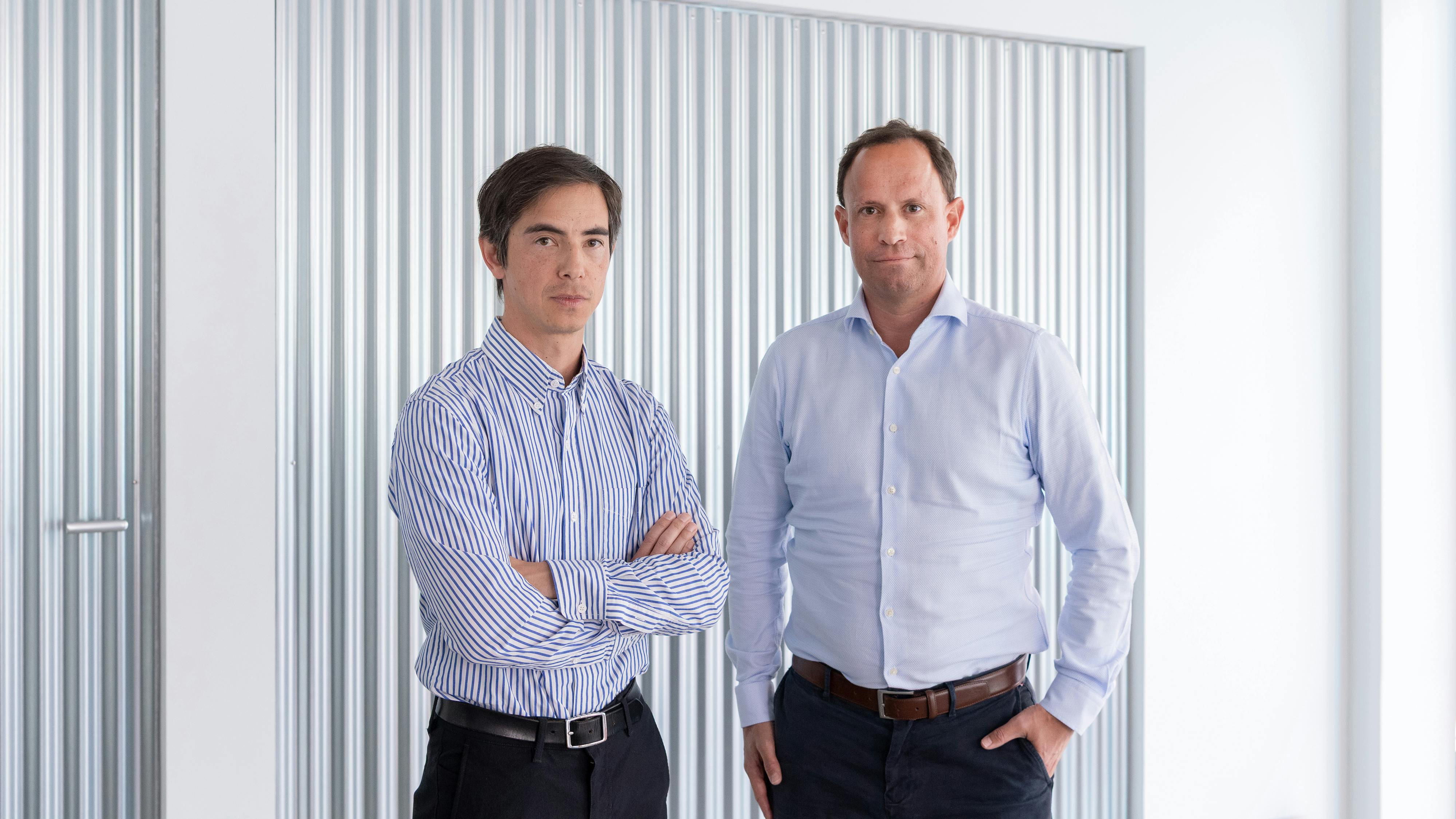
What does it take to turn promising research into concrete applications? In a conversation with Michio Painter (TMA) and Ralph Schiess (ZH3D), it becomes clear: good ideas alone are not sufficient. Transforming research into real products takes strategic guidance, regulatory expertise and entrepreneurial thinking.
Mr Painter, the TMA (Translation Medicine Accelerator), of which you are the Head, has supported more than 100 projects in just a few years. In which areas do you currently see particular potential for innovation?
Michio Painter: We support researchers in the field of life sciences, helping turn their laboratory findings into products that are ready for the market – from diagnostic procedures to therapeutics. The variety is enormous: from approaches to treating hearing loss and new therapies for fighting fibrosis and multiple sclerosis, to innovative materials for dentistry. Rare genetic diseases also increasingly find themselves in the spotlight. We see a great amount of momentum, particularly in the area of personalised oncology. Many projects are working on more precise diagnoses and individually tailored therapies. It’s in this respect that the University Medicine Zurich’s comprehensive network pays dividends: the close, interdisciplinary collaboration between research and clinical medicine creates the perfect conditions for implementing such innovations.
In an ideal situation, what does the route from the initial idea to clinical application look like?
Painter: It can take more than ten years before the initial idea is used in the treatment of patients. Right from the outset, it’s crucial that researchers understand how their technology can be translated into a marketable product. The difference is comparable with the difference between the discovery of graphite and the construction of a functioning pencil. In order for an idea to be able to make the leap into application, specialised partners are needed at an early stage – for example investors or companies from the healthcare sector that have experience in bringing products to market. They have to be prepared to invest high sums of money, sometimes reaching tens or even hundreds of millions. Without this investment, new developments aren’t able to make it into clinical studies and therefore can’t reach a greater number of patients.
Can you name a specific example?
Painter: Currently, I'm supervising a scholar who has developed an innovative therapeutic approach to treating fibrosis. Now, he’s facing the crucial question: what exactly should the active substance look like? Should it be a small molecule, an antibody or a more complex form such as an antibody-drug conjugate? It’s precisely for these types of strategic considerations that we at the TMA provide support: for which option is the opportunity greater – both as a medicine and from the perspective of the market and investors? Once a project is ready to progress to the development phase, it’s time for Ralph Schiess and his team to take the reins.
Mr Schiess, you are the CEO of the Zurich Hub for Drug and Device Development (ZH3D). What exactly distinguishes your work from that of the TMA?
Ralph Schiess: While the TMA mainly provides support in matters surrounding the strategic focus, at ZH3D our work begins to coincide with the start of the technical implementation stage – predominantly against the backdrop of regulatory considerations. We create an environment in which research can be conducted in accordance with the GxP (good practice) standards of GLP, GMP and GCP*. These quality requirements are crucial for clinical studies and authorisation further down the line. For spin-offs it’s important to have an understanding of and implement these standards early on to avoid expensive errors and delays. For example, if an experiment is not correctly documented or if there are no experimental replicates, that can become a real problem later on.
What specific role do GxP standards play in this regard?
Schiess: They are the basis for all later authorisations. Without these standards, prototypes remain stuck in the lab. We help the teams see these regulatory requirements not as hurdles, but as part of the development process – like design control, documentation or quality management, for example. This not only helps minimise risks, but also enables considerably more effective development cost planning.
You are currently establishing a team. What is the purpose of this when you could simply consult external advisers?
Schiess: Previously, lots of questions were outsourced to external advisers. This can work, but often the context is missing. That’s why we’re developing a central infrastructure at the University of Zurich: with coaching, training and pooled expertise. We will, of course, continue to work with external partners. But we are involved with the laboratory, the market and the regulatory framework, which is how we ensure we can implement valuable practical knowledge in upcoming projects. This also includes training and our own GxP academy, which we hope will help establish a new innovation culture in the long term.
How do the TMA and ZH3D work together in specific terms?
Painter: Very closely. Together, we aim to review dozens of projects every year. This is currently resulting in four to five spin-offs, but there is potential for significantly more. With the right support, it could be 10 or 20. We’re working on this as a team.
How important is entrepreneurial thinking in this process?
Schiess: Extremely important. Many researchers are brilliant academics, but they’re not entrepreneurs. They have to learn to speak with investors, lead teams and successfully realise product ideas. The earlier they have experience with this, the better.
*Glossary:
GxP = Good Practice
GLP = Good Laboratory Practice
GMP = Good Manufacturing Practice
GCP = Good Clinical Practice
From research to marketability: Zurich offers ideal conditions for successful spin-offs
The founding of a spin-off typically involves a transition from pure research to commercialization, something that presents a considerable challenge. This process involves developing a marketable application or product based on the results of research. It includes aspects such as product development, market analysis, business modeling, financing, legal framework conditions, and setting up a fully operational business. These hurdles need to be cleared in order to turn a scientific idea into a successful commercial enterprise.
Targeted support improves competitiveness
To help close the gap between scientific research and use in practice, University Medicine Zurich (UMZH) is offering interested spin-offs an opportunity to improve their competitiveness with the Translational Medicine Accelerator (TMA). If the development process receives professional support and is therefore accelerated, this can give medical innovations a better chance of succeeding on the market. The TMA offers tailored advice, business courses, and mentoring, and connects company founders with relevant parties from industry and also investors. The UZH Life Sciences Fund is particularly worthy of mention. This provides specific financial support for spin-offs to help them develop their business strategy and successfully scale up their projects.
The TMA has supported almost 100 projects over the past three years. An important role is also played by SPARK ZURICH, a mentoring network supported by the TMA, which is based on the successful program with the same name, run by Stanford University in the USA. Founder teams are able to present their projects and plans and benefit from feedback given by a range of external experts.
Zurich as a unique place for business and commerce
The city itself, as a location, offers ideal conditions for innovative life sciences companies that are looking to build a successful business. And as Switzerland’s business hub, the «Greater Zurich Area» certainly impresses with its high density of small biotech companies, established industry partners, and leading-edge laboratory infrastructure. The region also offers access to the «Swissmedic Innovation Office,» which supports innovations in the area of medical devices and medicines. The promotion of spin-offs not only facilitates the emergence of innovative companies, but also creates highly skilled jobs. The proximity to leading universities and renowned university hospitals is another big draw. The close collaboration with leading global research facilities and access to international markets are of particular interest to investors.
By helping to fuel this dynamic innovation landscape, University Medicine Zurich is making a considerable contribution toward strengthening Zurich’s position as a leading center for medical innovations. This ultimately results in a significant improvement in healthcare provision and emphasizes Zurich’s key role in the global life sciences sector.
Credits
Interview: Marita Fuchs
Photo: Frank Brüderli


