Measuring stress
In the laboratory of Johannes Bohacek, a neuroscientist at ETH Zurich, cameras observe every movement of stressed mice. Artificial intelligence analyses these movement patterns, and researchers use the results to find answers to a central question: why does stress make some people ill, but not others?
Contact
Prof. Dr. Johannes Bohacek
Professor of Molecular and Behavioural Neuroscience at ETH Zurich
+41 44 633 87 51
E-Mail
UMZH institutions
University of Zurich
ETH Zurich
University Hospital Zurich
University Hospital of Psychiatry Zurich
Team
A near miss, or a phone call bearing bad news: within fractions of a second, the body switches gears and adrenaline floods the bloodstream, the heart races and muscles tense up. The age-old «fight or flight mode» kicks in – a response that has ensured the survival of both humans and animals for thousands of years.
«Stress is a risk factor for many of today’s most common diseases», says Johannes Bohacek, Professor of Molecular and Behavioural Neuroscience at ETH Zurich. But although stress is everywhere, science and medicine have surprisingly little understanding of what happens in the brain at the point when we come under stress. This is precisely what Bohacek aims to find out. His research was part of the «STRESS» project, a major interdisciplinary research programme of the University of Zurich and ETH Zurich, funded by the former Hochschulmedizin Zürich. (See below)
The brain as stress HQ
The stress response is not coordinated just anywhere in the body – it starts in the brain. Bohacek is particularly interested in the locus caeruleus, a tiny cluster of nerve cells located deep in the brain stem. From there, the messenger substance noradrenaline, a close relative of adrenaline, is released when stress arises.
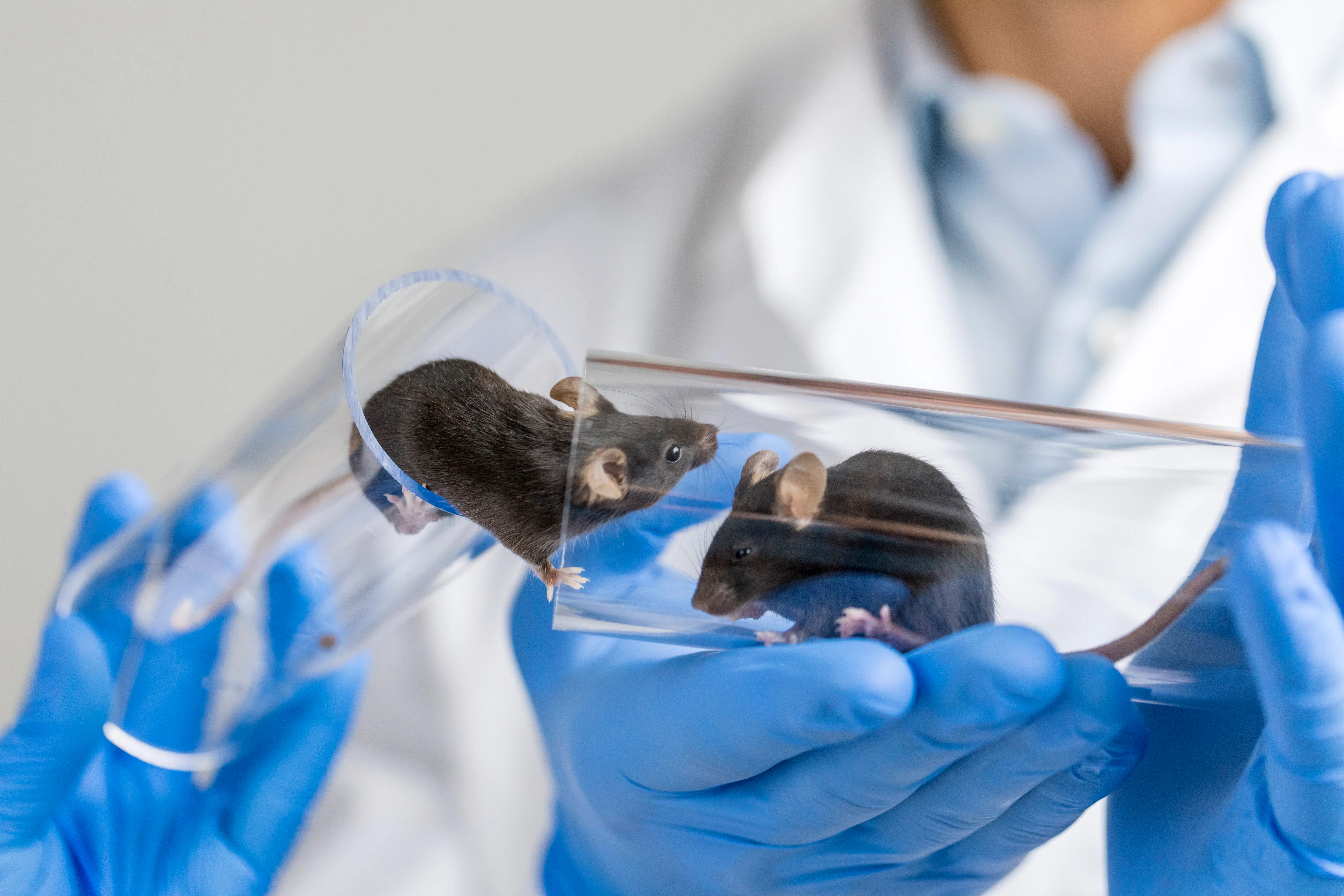
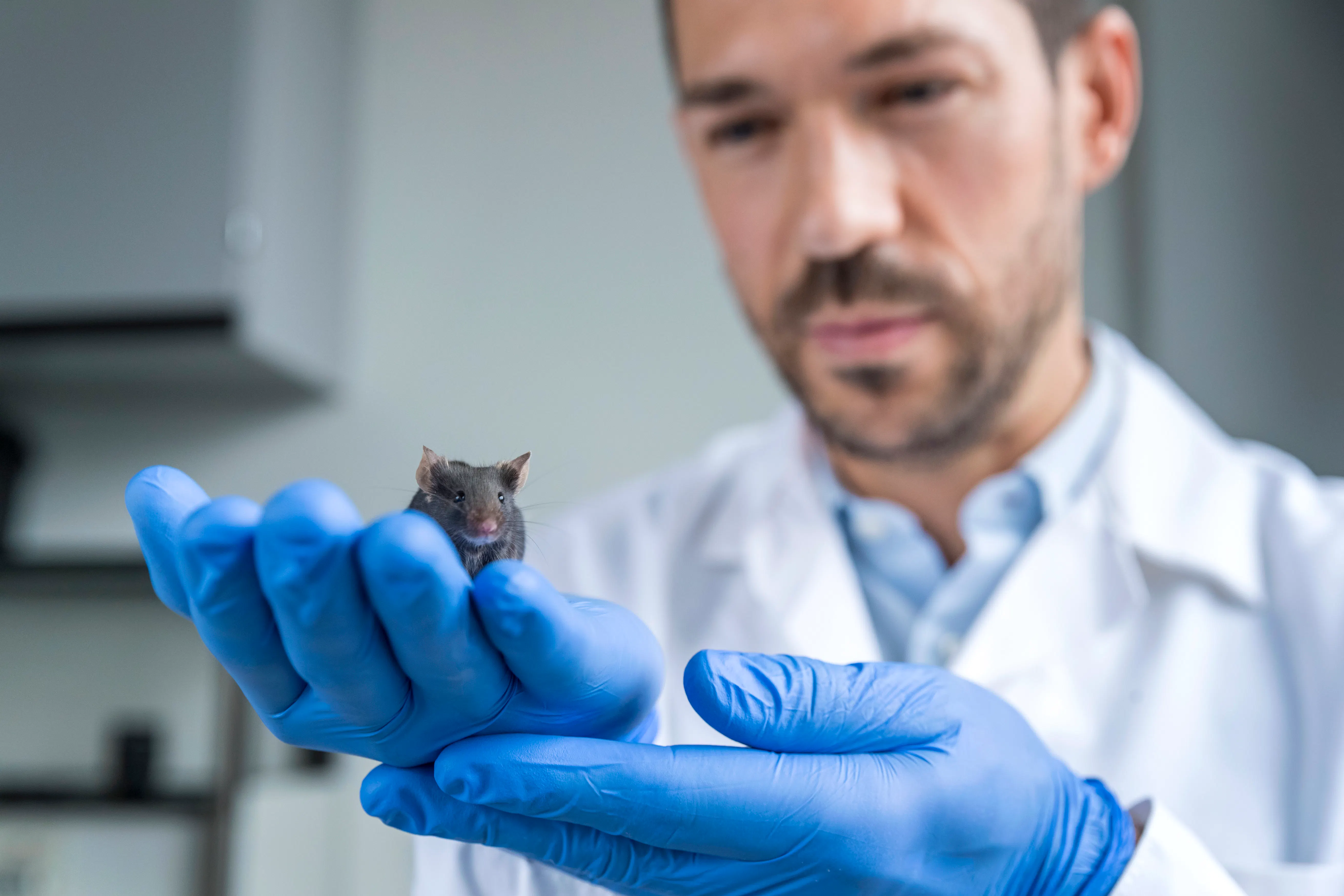
To study these processes, Bohacek and his team are working with mice. The stress reaction in mice brains is sufficiently similar to that of humans to allow basic findings to be derived for humans too. Rather than just analysing tissue samples in the laboratory, the neuroscientists are essentially observing the brain in the body at work. Fluorescent markers are used to show when individual nerve cells are active. In addition, surgically implanted thin fibre-optic cables make it possible to read signals from deep within the brain. For instance, the researchers can read the activity of the locus caeruleus while the animal moves and behaves freely. Using a similar technique, namely optogenetics, the release of noradrenaline can also be stimulated or blocked in a targeted manner via light pulses. Recently, Bohacek and his team used this method to show in the open-access journal eLife which molecular cascades such a noradrenaline surge triggers in the brain.
Why do the researchers use mice as an animal model and not special laboratory-cultivated «mini-brains», known as organoids? Bohacek shakes his head: «Organoids allow for exciting new insights into the brain’s development and the interaction of brain cells. But artificial mini-brains are not connected to a body. They have no sensory organs, they don’t select the appropriate coping strategies via complex circuits in order to deal with a stressful situation, and they are not linked with the organs that are needed for a stress reaction, such as the blood, the adrenal glands or the liver. In contrast with organoids, the animal model provides this holistic approach».
Ten minutes in the testing enclosure
However, most of his animal experiments do not involve surgical operations, but behavioural analyses. The principle is very straightforward: a mouse is put into an unfamiliar, open-topped box and filmed for ten minutes. What it does in this time is surprising. It turns this way and that, explores its surroundings, stands on its hind legs to find its bearings, cleans its fur when it gets nervous, or retreats into a corner.
Previously, researchers would have assessed videos of this kind with checklists – a method considered comparatively unreliable. «Two different people assessing the same video often come up with different results», says Bohacek. These days, artificial intelligence does this job. Thanks to machine learning, algorithms identify behavioural patterns more reliably, grasping far more variables than a human could ever keep track of. «Unlike humans, the algorithms are never tired, inattentive or influenced by expectations. They can analyse thousands of minute movements simultaneously and thereby detect patterns that are invisible to the human eye», says Bohacek.
The use of these modern methods has another advantage: it reduces the number of laboratory animals. «We have shown that this method requires fewer animals in order to demonstrate an effect», the neuroscientist explains. This is in line with the so-called 3R principle (replace, reduce, refine) – the scientific endeavour to replace, reduce or refine animal experiments.
Why one breaks down and others don't
However, the really fascinating question is this: why do various individuals react to stress so differently? This phenomenon is even observed in laboratory mice. Most animals cope with acute stress surprisingly well. Although their anxiety levels are briefly raised, according to Bohacek, after just a few hours it is no longer possible to tell whether they experienced stress at all.
Nevertheless, some mice take longer to recover, remaining more anxious and exhibiting changed behaviour. This different resilience behaviour is precisely what Bohacek and his team aim to study in more detail. The behavioural analyses in the animal model show that the mice react differently to the new stressful situation even when they are genetically identical. «Brain development is extremely complex, and even with identical genetic material, there are lots of random components that are reinforced throughout life due to experiences and social dynamics such as dominance or subordination in groups», the researcher explains.
It is similar with people. Many people cope with even the toughest suffering – such as the death of a relative, a serious accident or experiences of war – without suffering lasting mental harm. Most people are surprisingly resilient in this respect, as many statistics show. Yet 10 to 30 per cent of those affected go on to develop anxiety disorders, depression or post-traumatic stress disorder.
«If we can identify the mechanisms that make some animals more resistant to stress than others, we can examine whether similar processes in people could form a basis for therapies», says Bohacek. He is convinced that a holistic understanding of the stress response will inevitably lead to breakthroughs in clinical practice, but he tempers premature hopes: in his view, fundamental research is still far from fully understanding the underlying mechanisms. «Every day, we are amazed anew by the incredible complexity of how the brain works». That is precisely why fundamental biomedical research is so important: anxiety and stress disorders not only pose a social challenge, but often mean huge mental and physical suffering for those affected.
The answer to the question of why some people cope with stress better than others is probably hidden deep in these nerve cells of the brain stem – and in the molecular signals that they emit. Whether therapies can one day be developed from this remains to be seen. But the search has begun.
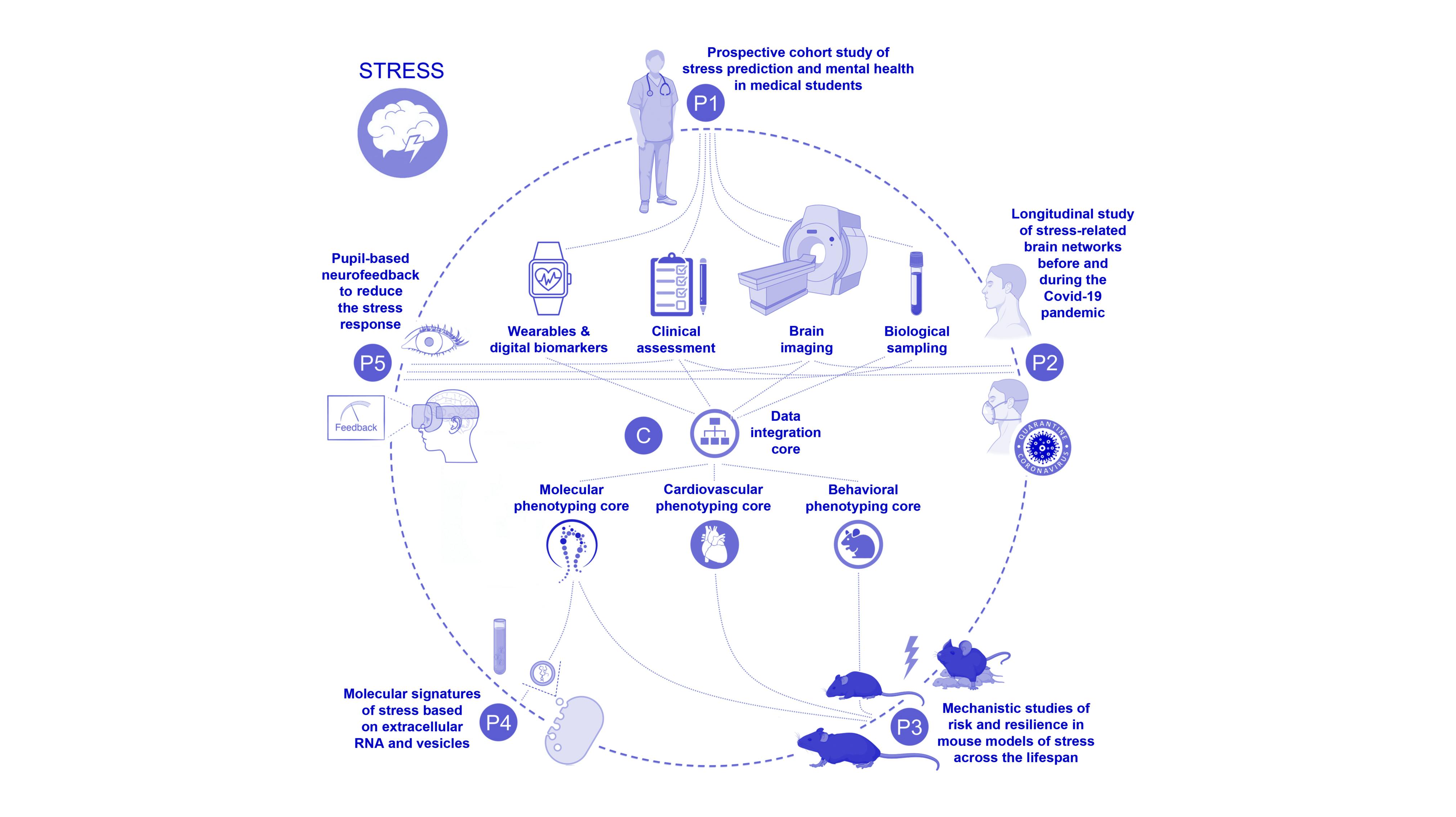
Prof. Isabelle Mansuy (UZH/ETH) and Prof. Birgit Kleim (UZH) were in overall charge of the STRESS project. Prof. Johannes Bohacek (ETH Zurich) was a project lead. STRESS has now come to an end; for three years, it brought together around 50 researchers who worked on various sub-projects on the phenomenon of stress. It has since given rise to further research initiatives at national and international level.
Inter- and national committees such as SwissStressNetwork and the Global Stress and Resilience Network are being continued.
The various research groups of the STRESS project at a glance (graph)
Service
University Hospital of Zurich:
Exercises to reduce stress
Treatments offered at the University Hospital of Psychiatry Zurich for stress-related disorders and burnout
Glossary
Locus caeruleus:
A small cluster of nerve cells in the brain stem that plays an important role in regulating stress and emotional responses.
Noradrenaline:
A messenger substance in the nervous system that helps the body respond to stress and increases alertness and attention.
Optogenetics:
A research method that allows nerve cells to be selectively activated or inhibited using light.
Organoids:
Laboratory-grown cell structures that mimic certain characteristics of human organs and are used for research purposes.
3R Principle:
An internationally recognised framework for the responsible use of laboratory animals. The three “Rs” stand for Replace, Reduce and Refine.
Credits
Text: Marita Fuchs, free journalist
Pictures: ETH Zurich / Alessandro Della Bella
ETH Zurich: Johannes Bohacek, Isabelle Mansuy, Nicole Wenderoth
University of Zurich: Birgit Kleim, Isabelle Mansuy, Todd Hare, Urs Meyer, Erich Seifritz, Michael Shanahan
University Hospital of Psychiatry Zurich: Birgit Kleim, Erich Seifritz